About the Lab
The Fossett Laboratory for Virtual Planetary Exploration at Washington University in St. Louis is shared research infrastructure for observation, data processing, and scientific computing.
Mission
The Fossett Laboratory pairs observation — from the field, from the air, and from orbit — with automated processing and analysis, so researchers spend their time on scientific questions instead of the machinery of reaching an answer. The work spans geology, ecology, archaeology, environmental science, and planetary surfaces, and the compute and model pipelines behind it are open to research well outside those fields.
The lab runs as shared research infrastructure — the instruments, technical staff, compute, and curated data that one research group would struggle to keep up on its own. That compute is GPU and cloud capacity rather than a workstation: H100-class GPUs for model training and large inference, and AWS for pipeline and processing work. We tie field instruments, satellite data, and that compute into workflows that anyone can rerun, and that hand back research-ready data rather than a pile of raw files.
Our aim is field science that runs continuously rather than one analysis at a time — reproducible and open by default — so observations turn into understanding faster. More on where this is headed under Vision.
Instruments, data, and training
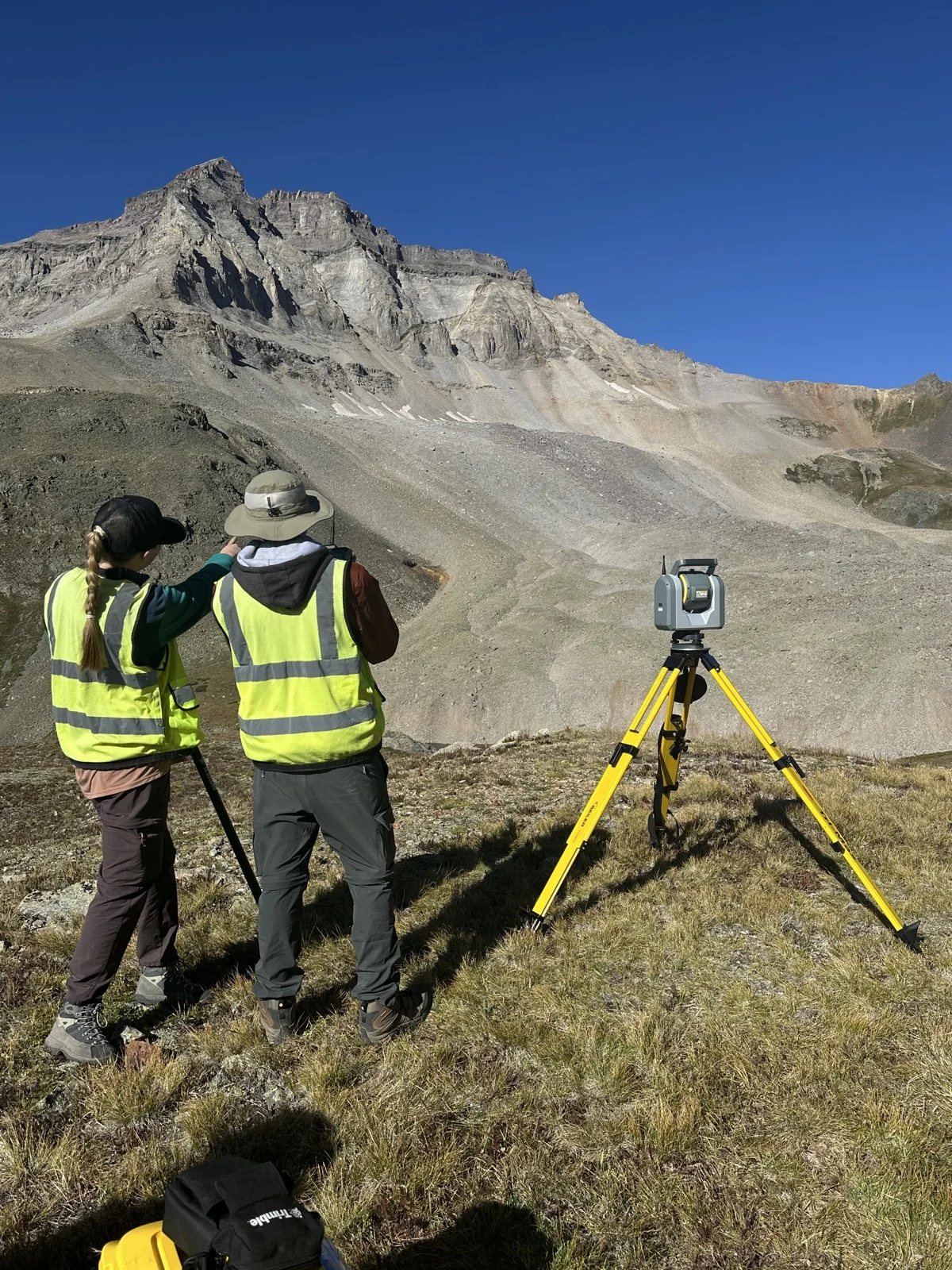
Field campaigns — local to the St. Louis region and international — feed a pipeline that carries data from collection through automated processing and AI analysis to visualization and publication. The lab maintains the field instrumentation that starts that pipeline: drone platforms, terrestrial and mobile lidar scanners, multispectral sensors, and survey-grade GNSS equipment. The full lifecycle is described under What We Do.
We also develop open data workflows and maintain a public STAC catalog of geospatial datasets, available for download under Creative Commons licensing.
We train people, too: how to run the field instruments, wrangle geospatial data, work in cloud-native pipelines, and apply AI to their own problems. And we work with whoever the science needs — academic, public, nonprofit, or industry — wherever shared equipment, data, or know-how lowers the barrier to a piece of research.
History
The Fossett Laboratory for Virtual Planetary Exploration at Washington University in St. Louis was established through a gift from noted adventurer and Washington University alumnus Steve Fossett. A record-setting aviator, sailor, and balloonist, Fossett completed the first solo balloon circumnavigation of the globe in 2002 and the first solo nonstop airplane circumnavigation in 2005. He was elected to the Washington University Board of Trustees in 1995. Fossett disappeared during a solo flight over Nevada in September 2007, and the university established the laboratory in 2008 in his honor.
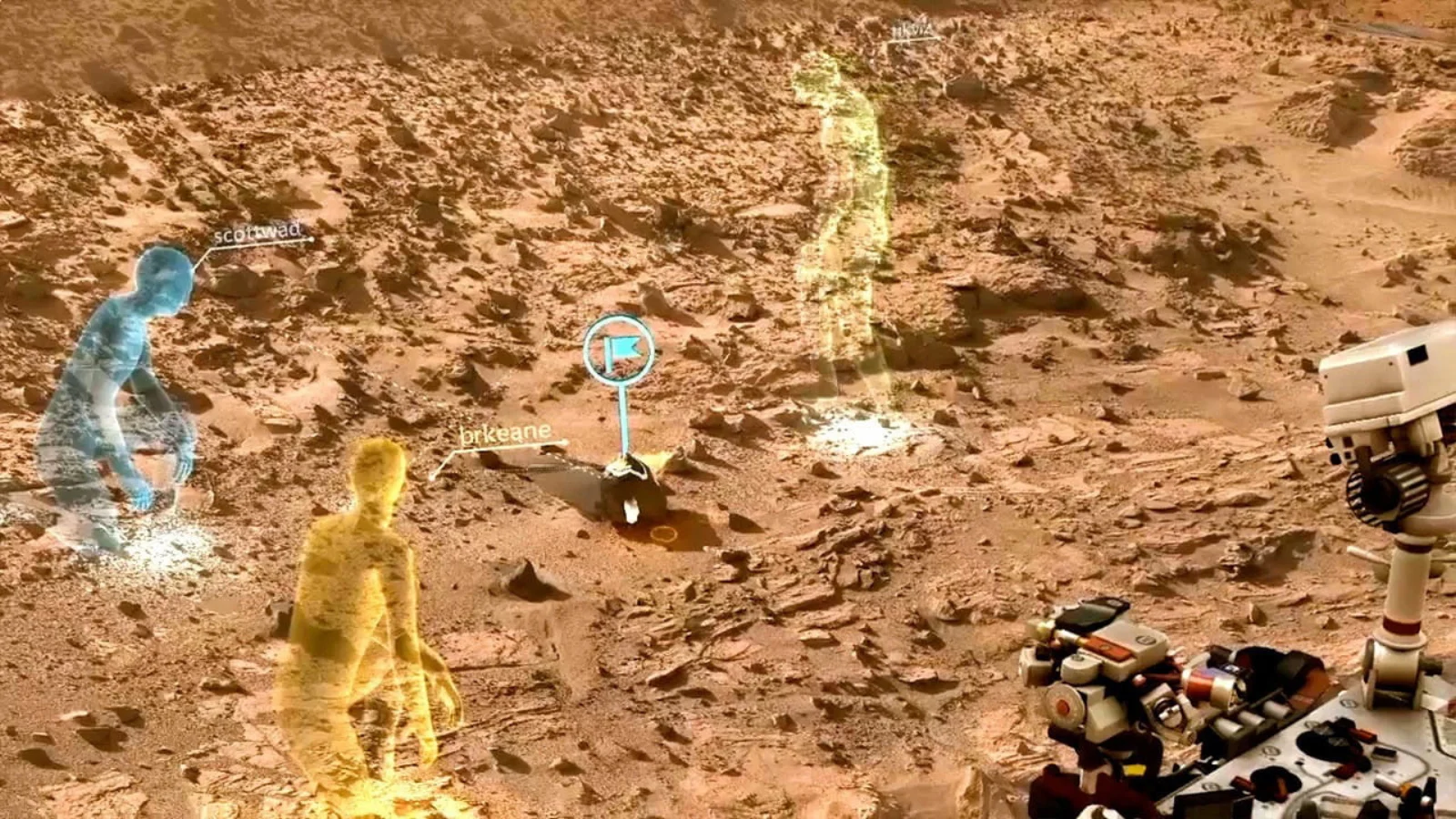
The lab originally centered on a CAVE (Cave Automatic Virtual Environment) immersive display for visualizing NASA planetary mission data, particularly from the Mars Exploration Program. It later pioneered the use of augmented reality in university teaching, developing the GeoXplorer app platform that brought 3D geological models to HoloLens, iOS, and Android devices. AR applications expanded across disciplines including art history, architecture, and language instruction.
The lab today combines field methods, automated processing, AI analysis, and visualization — including the XR work it pioneered. The work supports research and teaching across the earth, environmental, and planetary sciences. See press coverage for more.
Support
The Fossett Laboratory is supported by the Department of Earth, Environmental & Planetary Sciences at Washington University in St. Louis and by the McDonnell Center for the Space Sciences. We also work with Seiler Geospatial, a regional surveying and geospatial equipment dealer, on hardware and training.